


What Should Be Included in a Fall Maintenance Checklist for Your GMC?
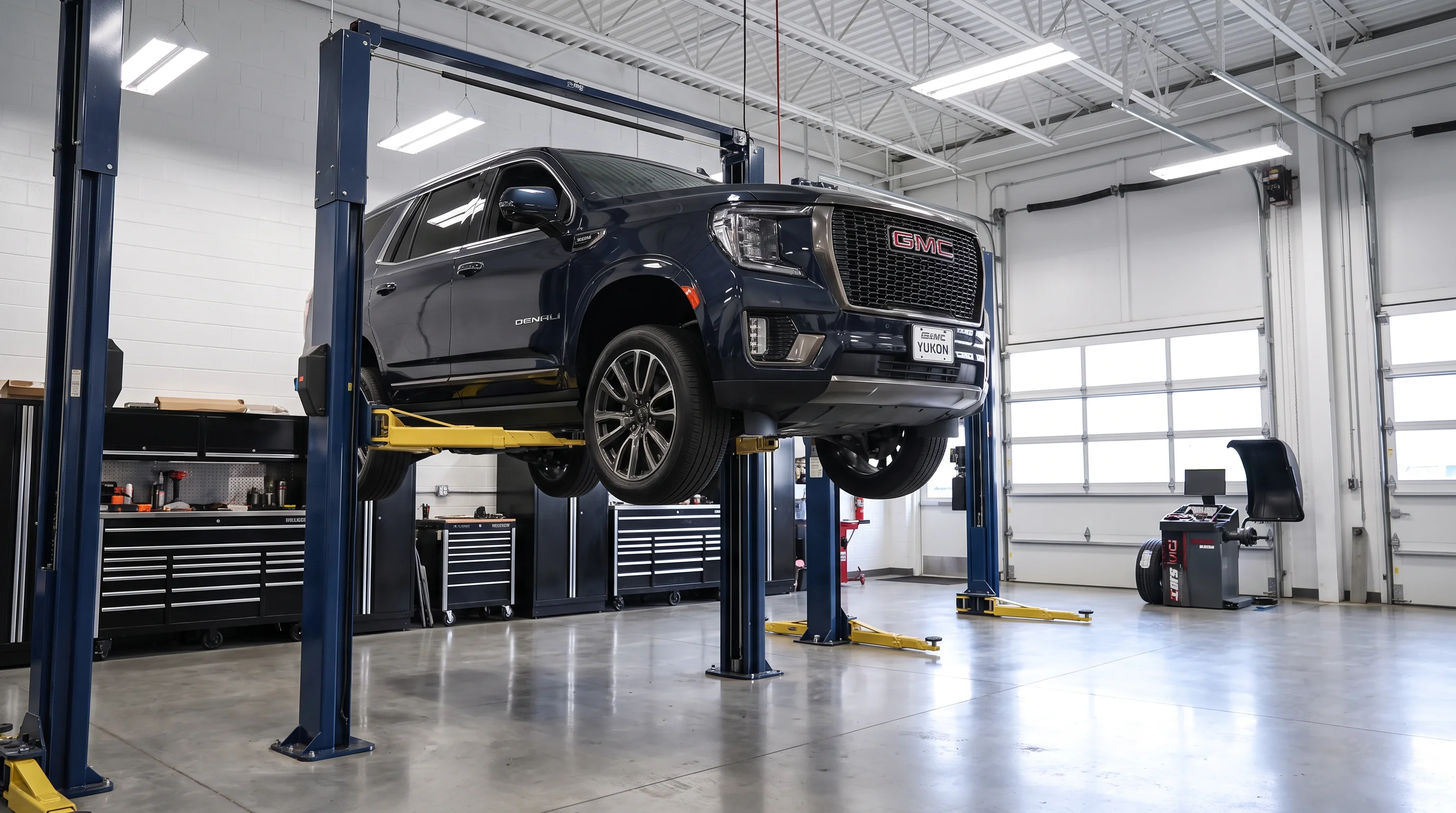
Summer heat wears down key vehicle parts. That makes autumn the best season to catch hidden damage. High temperatures speed up battery fluid evaporation and break down wiper blade rubber. Heat cycling also stresses cooling system hoses. Fixing these small issues before winter prevents big roadside breakdowns when temperatures drop overnight.
A full fall checkup covers six systems — the battery and charging system, cooling system and engine fluids, tires, brakes, wipers and washer fluid, and the HVAC and defrost system.
The Six Areas a Fall Service Checkup Covers
A full fall service checkup covers six areas:
Battery and Charging System
Load-test the battery to confirm it still holds enough voltage to crank a cold engine.
Cooling System and Engine Fluids
Test the antifreeze freeze point. Check hoses for soft spots and leaks.
Tire Pressure and Tread Inspection
Set tire pressure to the factory spec. Measure tread depth on all four tires.
Brake System Diagnostics
Measure the brake pad friction material. Check the rotors for scoring or rust.
Wiper Blades and Washer Fluid
Fit all-weather wiper blades. Swap summer washer fluid for a low-temp anti-ice blend.
HVAC and Cabin Comfort
Check defrost airflow and the cabin air filter so fogged glass clears fast.
Handling these tasks before severe weather arrives protects parts from early failure. Drivers can visit our Waxahachie service center or call the service desk to talk with certified GMC technicians.
The information in this article is general guidance and does not constitute a specific diagnostic or repair recommendation for any individual vehicle. Repair and maintenance decisions should be made in consultation with a certified technician based on the specific condition of your vehicle.
Why Should You Check Your GMC Battery, Coolant, and Engine Fluids in the Fall?
What the Battery Numbers Mean
Cold slows the chemical reaction inside a battery. AAA reports that a battery is roughly 35 percent weaker at 32°F and loses about 60 percent of its strength at 0°F, leaving only around 40 percent of its rated power. Cold also thickens engine oil, so the starter has to fight more resistance. The battery has to give its most at the exact moment it can give the least.
A battery that works fine in warm weather may not turn over a cold engine block. Three readings tell you where yours stands:
| Measurement | What It Means |
|---|---|
| 12.6 volts or higher, engine off | Fully charged and healthy |
| Drops below 9.6 volts under a load test (half the rated CCA for 15 seconds at 70°F) | Replace the battery before winter, not after a no-start |
| Three to five years in service | Typical lifespan — worth a load test every autumn past year three |
Coolant and Washer Fluid
Engine fluids need seasonal attention too:
- Engine Coolant: Cooling systems need a 50/50 mix of DEX-COOL antifreeze and water. Per the ACDelco product specification, that blend protects down to −34°F. Watering it down weakens both the freeze protection and the corrosion protection.
- Windshield Washer Fluid: Summer washer fluid can freeze inside reservoir lines, crack the reservoir, or damage the fluid pump. Replacing summer fluid with a de-icing solution formulated for freezing temperatures prevents system damage and keeps windshields clear of icy sludge.
Engine Oil: Viscosity Is Not Interchangeable
Engine oil is where guesswork gets expensive. Putting the wrong grade in a turbocharged or diesel engine can cost you both protection and warranty coverage. Each engine family has its own requirement:
| Engine | Viscosity | Specification |
|---|---|---|
| 5.3L EcoTec3 V8 | 0W-20 | dexos1 full synthetic |
| 2.7L TurboMax four-cylinder | 5W-30 | dexos1 full synthetic |
| 3.0L Duramax Turbo-Diesel | 0W-20 | dexosD-rated — not dexos1 |
Cold thickens oil that is too heavy for the job. That delays oil pressure at startup, which is why the right grade matters more in autumn than at any other time of year. The grade is printed on your oil fill cap. For a full engine-by-engine breakdown with capacities and filter part numbers, see our GMC Sierra 1500 oil type and capacity guide.
The information in this article is general guidance and does not constitute a specific diagnostic or repair recommendation for any individual vehicle. Repair and maintenance decisions should be made in consultation with a certified technician based on the specific condition of your vehicle.
Why Should You Check GMC Tire Pressure and Tread in the Fall?
Pressure Falls With the Temperature
Air contracts as it cools. Tire pressure falls about 1 psi for every 10°F drop in outside temperature, according to AAA. That changes how much tread actually meets the road. The result is uneven wear, worse fuel economy, and longer stops on slick pavement.
Set tire pressure to the Tire and Loading Information placard just inside the driver’s door. Never use the maximum pressure stamped on the sidewall. Underinflated tires flex too much, build heat, and weaken the sidewall. NHTSA recommends checking pressure monthly. In autumn, check it again after any sharp cold front.
How Much Tread You Actually Need
Tread depth decides how well a tire clears water, slush, and loose ice. Texas ended its mandatory annual safety inspection for most non-commercial vehicles in January 2025 under House Bill 3297. Vehicles registered in Ellis County still need an annual emissions test, but that test does not measure tread. Nobody is checking your tread for you anymore. These are the numbers that matter:
| Remaining Tread | What It Means |
|---|---|
| 2/32-inch | Worn out. NHTSA’s replacement threshold, and where the built-in wear bars sit flush with the tread |
| 4/32-inch | Practical floor for wet and icy grip, per Tire Rack wet-braking testing |
| 5/32-inch | Point where all-season tires start losing snow and slush traction, per Tire Rack |
The gently rolling plains around Waxahachie are laced with farm-to-market roads where a surprise ice patch demands every bit of traction.
Why Tires Decide Whether StabiliTrak Works
Safety systems like StabiliTrak electronic stability control and four-wheel drive depend entirely on tire grip. Owners often ask whether a temperature drop alone can trigger a tire pressure warning before an overnight freeze. It can. Under the federal standard, FMVSS No. 138, the light comes on when a tire falls roughly 25 percent below its placard pressure, and a hard cold front is often enough to cross that line. Checking tires before winter keeps these systems working the way they were engineered to.
Driver-assistance and advanced safety systems are supplemental aids and are not substitutes for safe and attentive driving. Availability, operation, and effectiveness vary by trim and equipment and depend on factors including road, weather, traffic, and vehicle condition. Always keep your hands on the wheel and your eyes on the road. See your owner’s manual for system limitations and details.
Where Can You Find the Official GMC Maintenance Schedule?
The official GMC maintenance schedule lives in your owner manual and in the GMC Owner Center. Your service department can also pull the schedule for your specific VIN. Lining up autumn service with the standard 7,500-mile interval gets the oil change, tire rotation, and multi-point inspection done before freezing weather arrives.
Modern GMC vehicles use what GM calls the Engine Oil Life System. It tracks engine revolutions, operating temperature, and driving conditions rather than mileage alone. Short winter trips never let the oil reach full operating temperature. Moisture then collects in the crankcase and breaks the oil down faster. Pairing fall service with an oil life alert covers both.
GM’s Factory Service Milestones
GM builds its published schedule on 7,500-mile increments and layers component milestones on top. These are the intervals that matter most heading into fall:
| Interval | What GM Calls For |
|---|---|
| 7,500 miles | Oil and filter change per the Engine Oil Life System, tire rotation, multi-point vehicle inspection |
| 22,500 miles, or every 2 years | Passenger compartment (cabin) air filter replacement, brake pad inspection |
| 45,000 miles | Engine air cleaner filter replacement (or every 4 years), transfer case fluid on four-wheel-drive models, brake fluid change (or every 3 years), automatic transmission fluid inspection |
| 150,000 miles | Engine cooling system drain and fill (or every 5 years), accessory drive belt inspection |
These are normal-service intervals. GM shortens several of them under severe-duty conditions, which include frequent towing, extended idling, short trips, dusty roads, and extreme heat or cold. Sticking to factory intervals protects both how the truck runs and what it is worth later. More seasonal and model-specific guidance is collected on our Service and Parts Tips hub.
The information in this article is general guidance and does not constitute a specific diagnostic or repair recommendation for any individual vehicle. Repair and maintenance decisions should be made in consultation with a certified technician based on the specific condition of your vehicle.
Quick Answers to Common Questions About GMC Fall Service
Does Texas winter weather require switching to a different engine oil weight in a GMC truck?
No. Gasoline GMC engines specify a full synthetic oil meeting the dexos1 specification in the viscosity printed on the oil fill cap, and those grades operate efficiently across both summer heat and winter freezes. Diesel engines are the exception and require a dexosD-rated oil instead. Provided you use the grade and specification listed in your owner manual, switching to a lighter viscosity for a Texas winter is unnecessary.
How does preconditioning an electric GMC vehicle help preserve cold-weather range?
Preconditioning warms the drive battery and passenger cabin using power grid electricity while the vehicle remains plugged into a charger. Warming the battery before driving optimizes chemical efficiency and reduces the energy drawn from the battery pack for cabin heating, maximizing overall driving range in cold weather.
What causes windshield washer fluid to freeze instantly on a warm windshield during a cold snap?
Summer-formulated washer fluid contains high water concentrations that evaporate quickly upon spraying, leaving behind water that freezes instantly against glass when outside air temperatures drop below 32°F. Replacing summer fluid with a winter-rated de-icing fluid containing alcohol lowers the freezing point and prevents windshield flash-freezing.
Should cruise control be disengaged when driving a GMC on wet or icy roads?
Yes, cruise control should always be disengaged on wet, icy, or slick surfaces. If tires lose traction while cruise control is active, the system may maintain engine throttle or attempt to accelerate to preserve speed, increasing the risk of vehicle slide or spin. Manual speed management gives the driver immediate throttle control.
How does road salt or brine used on Texas highways affect the underbody of a GMC?
Chemical anti-icing agents and road salt accelerate corrosion on exposed metallic frame components, brake lines, and suspension fasteners. TxDOT crews pretreat North Texas highways and overpasses with salt brine ahead of winter storms, so washing the vehicle undercarriage thoroughly after driving on treated roads removes salt deposits and guards against long-term surface rust.
The information in this article is general guidance and does not constitute a specific diagnostic or repair recommendation for any individual vehicle. Repair and maintenance decisions should be made in consultation with a certified technician based on the specific condition of your vehicle.
Schedule Your GMC Fall Maintenance at Legacy GMC of Waxahachie
Staying on top of routine fall service is the best way to protect your truck’s parts, stretch tire life, and keep handling safe through an unexpected freeze. Certified technicians at Legacy GMC of Waxahachie handle complete multi-point inspections and install genuine factory parts, so your GMC stays road-ready all season.
Our service center runs battery load tests, cooling system pressure checks, brake evaluations, and tread depth measurements. The diagnostic equipment is built specifically for GMC trucks and SUVs. Whether your truck needs fresh engine oil, a coolant flush, or a set of all-terrain tires, our factory-trained team works to strict manufacturer standards.
Do not let the first cold front be the test. Visit us at 1701 US-287 Byp in Waxahachie, or reach our service team directly at 469-553-0877.